Source Eco Friendly Non Slip Wooden Chopping Board for Kitchen
Find 30 eco friendly non slip wooden chopping board options from Chinese manufacturers. Compare bamboo and wood materials, FDA and LFGB certifications, and various sizes to select the best supplier for your wholesale needs; compare the available evidence and request quotations based on your requirements.
Key considerations
Products List



Comprehensive Sourcing Guide
Eco Friendly Non Slip Wooden Chopping Board Sourcing Guide
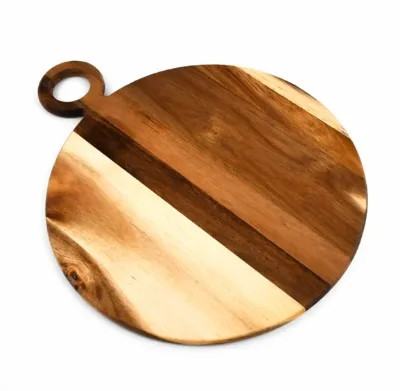
Buyers seeking eco-friendly non-slip wooden chopping boards must first distinguish between solid wood and bamboo variants, as the supplied data indicates both materials are available in the market. The observed product attributes highlight that bamboo options often feature a "Thickening" specification and a "Square" shape, while wood alternatives may appear in "Round" configurations. This material distinction is critical because bamboo offers a naturally dense grain that resists knife marks, whereas traditional wood provides a softer cutting surface that preserves blade sharpness. Procurement teams should verify the specific wood species or bamboo grade to ensure the product meets the intended durability and aesthetic requirements for their target market.
The functional design of these boards frequently includes "Anti-skidding" and "Anti-friction" properties, which are essential for safety during food preparation. Listings confirm that some models feature a "Grid or Orange Peel" surface texture to enhance grip, while others rely on the natural friction of the wood grain. Buyers should prioritize products that explicitly state these anti-slip attributes, as they reduce the risk of accidents in commercial kitchens and home environments. Additionally, the availability of "Flexible" designs suggests that some suppliers offer boards that can be easily maneuvered or stored, adding versatility to the core utility of a standard chopping board.
Product Scope and Observed Listing Signals
The current market inventory reveals a diverse range of product models, including specific identifiers like "JMBamboo," "XH-K110," and "JH-M126," indicating a broad supply base. These listings demonstrate that suppliers offer customization options, allowing buyers to tailor dimensions and features to specific brand needs. The observed price range of 0.5 to 20 USD suggests significant variation based on material quality, thickness, and finishing processes. Buyers must carefully evaluate the "Grade A" and "SGS" standards mentioned in the data to understand the quality tier associated with different price points, ensuring they do not compromise on safety for cost savings.
Packaging and shipping logistics vary significantly across the observed listings, with options ranging from "Kraft Paper Box" to "Export Standard Carton" and "Carton/Export Pallet." These packaging choices directly impact the protection of the wooden surface during transit and the overall cost structure of the order. The "Stocked" attribute found in some listings implies immediate availability for smaller orders, while others may require production lead times. Procurement managers should align their inventory strategy with these packaging and stock signals to optimize cash flow and minimize storage costs for bulky wooden items.
Technical Specifications to Verify
Dimensional accuracy is a primary verification point, as the data cites specific standards such as "30452 cm" and "3628cm" alongside larger formats like "400600*30mm." Buyers must confirm that the "Thickening" specification aligns with their operational needs, as thicker boards generally offer better stability and longevity. The "Medium" size category is common, but the availability of "Double-sided" designs and "Set" configurations requires precise measurement checks to ensure compatibility with existing kitchen equipment or storage racks. Verifying these exact dimensions prevents mismatches in product deployment and ensures the boards fit the intended usage scenarios.
Surface treatment and material composition are equally critical technical factors that define the board's performance. The observed "Grid or Orange Peel" surface textures are designed to prevent slipping, but buyers must verify that these textures do not harbor bacteria or become difficult to clean. The distinction between "Natural" and "Carbonized" colors indicates different processing methods that affect the wood's hardness and resistance to moisture. Additionally, the "PE" plastic type mentioned in some listings suggests hybrid designs, requiring buyers to clarify the ratio of wood to plastic to ensure the product remains truly eco-friendly and meets sustainability goals.
Compliance and Safety Documentation
Food safety certifications are non-negotiable for wooden chopping boards, and the supplied facts confirm the presence of "FDA," "LFGB," and "SGS" certifications in the market. Buyers should request current test reports for these specific standards to verify that the wood has been treated with safe, non-toxic finishes and that the product does not leach harmful substances. The "CE" mark is also noted in the data, which is essential for European market entry. Procurement teams must ensure that the certification documents are valid for the specific product model and batch, as certifications can vary between different manufacturing lines or material sources.
Beyond food contact safety, environmental compliance is a key consideration for eco-friendly products. While "FSC" is listed as a background fact, buyers should explicitly request proof of sustainable sourcing if they intend to market the boards as environmentally responsible. The "Eco-Friendly" attribute is frequently claimed, but without third-party verification, this remains a marketing statement rather than a verified fact. Buyers should demand documentation that traces the wood or bamboo back to sustainable forests or responsible harvesting practices to substantiate their sustainability claims and avoid greenwashing accusations in their supply chain.
Cost Drivers and Commercial Terms
The minimum order quantity (MOQ) observed in the market ranges from 50 to 2000 units, creating a significant barrier for small buyers while offering economies of scale for larger retailers. This wide range suggests that suppliers may offer tiered pricing structures, where higher volumes reduce the unit cost significantly. Buyers must calculate the total landed cost, including the "Export Standard Carton" or "Carton/Export Pallet" shipping fees, which can vary based on the weight and volume of the wooden boards. Understanding these MOQ thresholds is essential for negotiating favorable terms and managing inventory levels effectively.
Customization capabilities are a major cost driver, as the data confirms that "Customization" is available for these products. Buyers should anticipate additional costs for custom branding, specific dimensions, or unique surface textures like the "Grid" pattern. The "Bland" attribute, listed as "Xuanheng," may refer to a specific brand or design line that carries a premium. Procurement teams should request detailed quotes that separate the base product cost from customization fees to ensure transparency. Additionally, the "Sample" availability of 100*100mm for free allows buyers to test quality before committing to large orders, mitigating the risk of costly mistakes.
Supplier Qualification and Quality Control
Supplier location is a critical factor, with the data explicitly identifying "Zhejiang Ningbo" as a primary origin point for these products. This region is known for its manufacturing infrastructure, but buyers should verify the specific factory capabilities to ensure they can meet quality standards consistently. The presence of multiple product models like "XH-K156" and "WB-008" suggests that suppliers may have diverse production lines. Buyers should conduct audits or request video tours to confirm that the factory maintains strict quality control measures, particularly regarding the "Anti-skidding" and "Anti-friction" features that are central to the product's value proposition.
Quality control protocols must address the natural variability of wood and bamboo materials. Buyers should establish clear acceptance criteria for defects such as cracks, warping, or inconsistent surface textures. The "Stocked" status of some items indicates that suppliers maintain inventory, which can be a double-edged sword; while it ensures availability, it may also mean older stock that has been exposed to humidity. Implementing a rigorous incoming inspection process is vital to catch any issues before the products reach the end consumer. Buyers should also verify the "Product Packing" standards to ensure that the boards are protected against moisture and physical damage during storage and transit.
Long-Term Procurement Checks
Sustainability and supply chain resilience are paramount for long-term success with eco-friendly wooden products. Buyers should regularly audit their suppliers to ensure that the "Eco-Friendly" claims remain valid and that the sourcing of wood or bamboo has not shifted to unsustainable practices. The "FSC" background note suggests that certification is a relevant long-term metric, and buyers should prioritize suppliers who can provide updated chain-of-custody documentation. This proactive approach protects the brand's reputation and ensures compliance with evolving international environmental regulations.
Product lifecycle management is another critical area for long-term procurement checks. Buyers must monitor the durability of the "Thickening" and "Anti-skidding" features over time to ensure they do not degrade with repeated use and cleaning. The "Double-sided" and "Set" configurations offer extended utility, but buyers should track return rates and customer feedback to identify any recurring quality issues. Establishing a feedback loop with the supplier allows for continuous improvement in product design and manufacturing processes. Regular reviews of the "Certification" status and "Standard" compliance ensure that the products remain safe and compliant throughout the procurement relationship.
FAQs
What certifications do the wooden chopping boards have?
The wooden chopping boards hold FDA, LFGB, and SGS certifications to ensure safety and compliance. These standards verify that the materials meet international food contact requirements. Buyers can rely on these documented certifications for quality assurance when sourcing from suppliers in China.
Can I request customization for the chopping board designs?
Yes, customization is available for the chopping boards to meet specific buyer needs. Suppliers offer options for different sizes, shapes, and surface finishes like grid or orange peel textures. This flexibility allows buyers to tailor products for their target markets while maintaining eco-friendly standards.
Which materials are used for the non-slip chopping boards?
The non-slip chopping boards are primarily made from bamboo and wood materials. These natural materials provide durability and an eco-friendly profile. Some plastic options are also available, but the core wooden variants feature anti-skidding and antibacterial properties for safe food preparation.
How are the chopping boards packaged for export?
The chopping boards are packaged in Kraft paper boxes or export standard cartons for protection. Some items use carton packaging with specific quantities per box to ensure safe transit. This packaging method supports the eco-friendly nature of the product while meeting international shipping requirements.
What is the origin location of these wooden chopping boards?
The wooden chopping boards originate from China, specifically from the Zhejiang Ningbo region. This location is a known hub for manufacturing these types of kitchenware products. Buyers can expect efficient logistics and established supply chains when sourcing from this specific geographic area.
What are the standard dimensions for the chopping boards?
Standard dimensions include sizes like 30 by 45 by 2 cm or 36 by 28 cm depending on the model. Other sizes such as 400 by 600 by 30 mm are also available for specific needs. These specifications ensure the boards fit various kitchen spaces and usage requirements effectively.
Are the chopping boards suitable for fruits and vegetables?
Yes, the chopping boards are explicitly designed for chopping fruits and vegetables. They feature antibacterial and anti-friction properties to ensure hygiene during food preparation. The design supports efficient cutting while protecting the surface of the board from damage during regular kitchen use.